Monday, 21 August 2017

2017 Kenya Election

August 21, 2017

Experiencing life outside your own country continues to broaden our perspective of global realisms.  The past few weeks have caused Morris and I to trust deeply that all would be well here in Kenya during their national election.  We have joined many around the world to pray for peace as we supported efforts toward promoting a calm election process as well as preparing for any potential emergency. We have a new appreciation for a place like Canada where the nuances of democracy are understood and followed without fear.  We have a more profound empathy towards a nation like Kenya where people have the same rights as anyone else but those rights are not always secure.  In 1963 Kenya became a democratic nation, but when a national egalitarian process like an election happens, suddenly there is no certainty that democracy will be followed completely.

We all knew this would be a close race between Uhuru Kenyatta, reigning President, and 72 year old Raila Odigna, the Opposition leader who was trying for the fourth time to secure the top seat in Kenya’s legislation. Interestingly, the fathers of both these men competed for the same office a number of years back.  Kenyatta’s platform focused on a promise to create a million jobs while Odinga said he would fight corruption in the country.  For weeks, people were tense and on the ‘edge of their seat’ to see whether this would be a diplomatic and non-violent process.  One horrific incident shattered hopes even before Election Day.   Levels of anxiety and uncertainty were raised when Chris Msando, director of the Information Technology commission overseeing the election’s voting process, was tortured and killed. Speculations over the cause and intention of this murder began to trickle through the land.

On August 08, nearly 80% of the 19 million eligible voters went to the polls to elect a new President. From 1:00 a.m. til late that evening, residents lined up for hours (some ques were 3-4 kilometers long) at more than 40,000 polling stations to hope their vote counted.  We woke the next morning to the news that Kenyatta was in the lead and Odigna was adamant this was a rigged election, declaring the voting process a fraud.  Immediately, some violent protests broke out, thankfully not reaching the feared levels from 2007.  As we heard of the fatalities, we knew that democracy has its limitations here and our hearts were saddened by the loss of life in an event that should be everyone’s peaceful right. It was particularly sad to know the Kibera neighborhood in Nairobi, the poorest area of Kenya, was specifically targeted. Those whom Jesus says should receive our greatest love and attention, were now the object of injustice.

It took three days before the voting tallies were complete and the incumbent President declared the winner, securing more than 57% of the votes. Every day we checked for the levels of safety around our communities and anxiously waited to ensure no major uprising occurred. When  myself and Commissioner Grace took our flight to Nairobi on Aug. 11, there was a noticeable extra police presence at the Kisumu airport. When Morris and the TC traveled to Kisumu on August 15, they could see the remnants of the fires that had occurred in the city.  Another disturbing news story revealed that the President of the IEBC (Independent Electoral and Boundaries Commission) had committed suicide. Once again, sadness surfaced.  After several days of wondering how Odigna would finally manage his defeat, it appears he has filed a petition with the Supreme Court to challenge the election results. The ruling will be released on September 01.

If I could borrow a line from my home country’s national anthem, I would choose these words for Kenya: God keep this land glorious and free.  We continue to pray for peace in Kenya. “In Thee, O Lord, do I put my trust.” 


Thursday, 13 July 2017

Election Preparedness

July 13.17

A couple weeks ago, I wrote a blog on peace. Basing my thoughts on the difference between sitting quietly on my front veranda and the reality of what is going on outside the compound, especially as it relates to the national election that is now very close.  Many people are concerned that peace will be disturbed and violence may erupt. Over the past few weeks, we have been tormented with news that violence has already occurred but Kenyans are still hopeful that this will not be a repeat of the 2007 'bloody' election.  The expectation is that the voting on August 8 will create a close race between the leader of the Jubilee party (currently reigning) and the opposition party (National Super Alliance).  The hope is that the election results will be released within 24 hours. This should alleviate the worry for post election violence. If the results are delayed, fears arise that the election process has been rigged which can trigger riotous responses.

Knowing the burden that is shared by so many Kenyans right now, The Salvation Army has taken a proactive approach to help support and prepare the people. With the possibility of unrest looming all too close, the two Territories - Kenya East and Kenya West - have combined forces to prepare for the people's safety and well being. A national conference was held for both territories with support from International Headquarters to provide training and equip many of our leaders to help promote a time of peace in the land and also to prepare for emergency responses. As Salvation Army leaders, we want to help build peace in the communities and do all we can to protect innocent people.

A recent report from the Election Preparedness Conference gives the details regarding what is being done here:

To help find as many ways and opportunities as possible to promote peace, The Salvation Army has planned various strategies.  Resources for Bible studies and sermons are available to help teach Christian values on peace and to remind people of the Christian perspective. Songs have been written about peace. Opportunities to promote peace have been taken during football tournaments, in school competitions, and at various other public events.  Banners with peace messages are being used in multiple ways. Household checklists with directives to be followed during the week of the election is being distributed as well as bookmarks, car stickers, and other resources - all in the name of building peace. A film that tells the whole story of conflict preparedness and peace building is also available. An excellent music video has been created to encourage Kenyans about peace. The production came as a result of recordings done here in both Kenyan Territories of various ministry units, including the Street Boys program and various schools.  (The video has just been released from IHQ and is now available for viewing through various media platforms - Facebook, Twitter, etc. - see the link below).

While all of the country is on alert regarding the election, there are certain 'hot spots' where violence is more likely to happen. Our projects team have visited several of these areas, providing information and sharing election preparedness resources, including taking the program into many schools to share with both students and staff on how to prepare for safety if needed. 1000 checklists have been distributed to 20 different areas. 500 car stickers and 2000 bookmarks were given to every Salvation Army Division and District. 

The other concern in case of disturbances following the election is the availability of food for people. Many people will choose to stay in their homes for a number of days. Markets and shops that usually provide food may have some challenges with their stock. People are encouraged to have at least one week's supply of food on hand.  In case of a need to support vulnerable or unprepared residents, The Salvation Army is preparing a stock pile of food in case of emergency. This includes the local food basics: maize, beans, cooking oil, rice, and sugar. Other emergency supplies such as blankets and mats will also be available.  As well, many of our compounds are being prepared to become a shelter for displaced people if needed. 

So what can you do to help?  Keep yourself informed through national television regarding the election and most importantly, pray.  Yes, please pray.  We believe God desires peace for his people and we believe in the power of prayer. I call upon all those who have faith in God (in whatever form you choose to express that), to pray for peace for Kenya for the next several weeks - both leading up to and after the Election Day (August 08).  We ask you to pray for us and for all our Officers and their families and for all the residents of this country. Morris and I, along with the Territorial Commander and his wife, have made adjustments in our schedules to limit our travel during this period. However, we are scheduled to attend a Zonal Conference in Madagascar and we ask for your prayers that our travel will be possible and safe. Commissioner Grace and I leave on August 11 for a Women's Conference that happens first and then Morris and Commissioner Stephen travel on August 14. Be assured we will not take any unnecessary risks and we will be quite confident that travelling is safe before leaving home.

If you have not already seen the video referenced above, I strongly encourage you to view it. The video was made possible by the partnership of International Development Services and International Emergency Services, both based at The Salvation Army International Headquarters in London, England.  It is worth the watch. A press release from IHQ recently quoted Morris regarding this project: "Lieut-Colonel Morris Vincent (Chief Secretary, Kenya West Territory) says: ‘Everything is so well done and the children express confidently and with great passion their desire for this time in our history to be peaceful. I express appreciation to all who partnered to make this happen. We value more than words can fully express the ongoing support from the international Salvation Army for our territory (in this case for both Kenya territories)."

Here is the link to view the video and the short documentary:  http://www.salvationarmy.org/ihq/kenyamyhome

Thanks everyone for all your love, thoughts, prayers, and support for us and especially now for this country that needs continued peace.


Monday, 3 July 2017

Injustice

July 04.17

Injustice
The word ‘injustice’ conjures many images in our minds. Human trafficking, terrorism, war, poverty, unequal distribution of wealth, and world hunger are a few. Injustice in its simplest terms is any unfair act or wrong treatment toward an individual or group. The most recent news story of the young American who died after being imprisoned in North Korea for 15 months is one more reminder. Recently I have been made aware of two examples that tear at my heart. One is FGM – Female Genital Mutilation. I barely knew what this was until this year. While this practice has been largely eliminated in Kenya, in some areas it still exists, often in secret. Some tribes and cultures still consider this procedure to be something good for young girls - a way to prepare them for marriage or even considered as a sign of beauty and respect. Yet, it seems like such an unfair attack on the innocent bodies of precious young women. FGM can be damaging physically, mentally, and emotionally.  Many of the girls affected are trapped and have to run away from home to escape - but they have no place to go. I feel sad that what some may view as a normal expectation can be so harming.

Another example of injustice came to my attention while I was preparing to go into the field with one of our Women’s Ministry groups called WORTH.  This income generating program started in 2012 and has been successful in several areas. Through the support of The Salvation Army initially from New Zealand and now through the US (SAWSO), financial support is enabling this program to continue. Groups of women in rural villages meet weekly, giving them opportunity to save and borrow money, mostly to help start their own businesses but it also provides literacy training and other life skills. During my first visit to the program, I heard many success stories.  Women testify to being more self-sufficient and better able to support their families – pay school fees, install electricity in their homes, buy milking cows, and pay for funeral expenses were a few of the stories I heard.

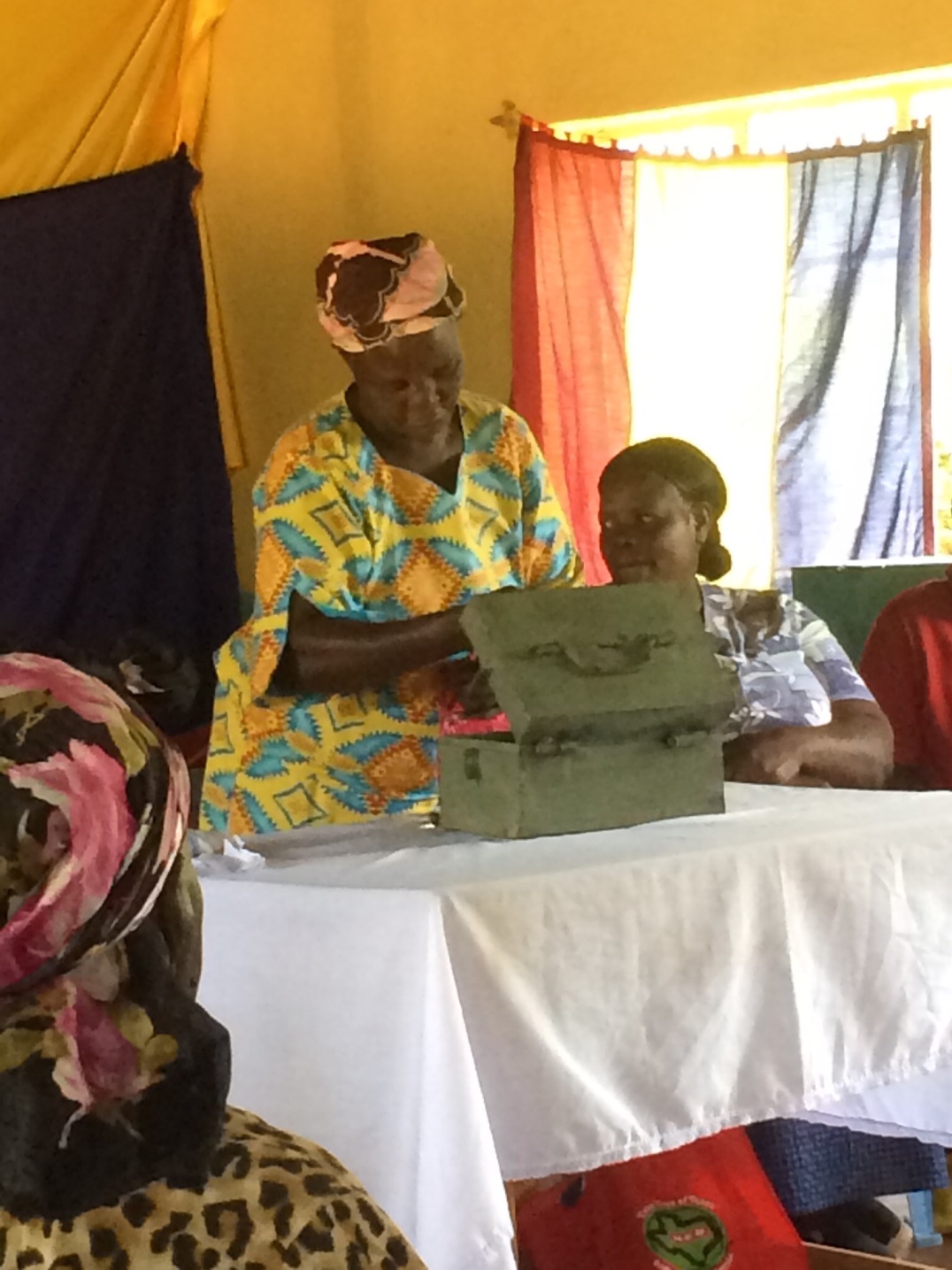
On route to my first WORTH group visit, the Officer at THQ who is in charge of the program shared with us a terrible injustice that happened in another group a few days ago. As part of the program, the treasurer takes the money box to her home for safe keeping. (I know this would not be an acceptable practice in Canada but it is here). The box is locked with three padlocks and three different people have keys so there is no way for the treasurer alone to have access to the money. This is part of their accountability procedures. The tragedy which happened, though, occurred late one evening.  Someone broke into the treasurer’s home and began to beat her, demanding she hand over the money box. The speculation is that someone leaked information into the village that this lady was keeping the box of money in her home and thus the attack. The treasurer survived the attacks.  Instead of giving them the group’s money, she gave them some of her own hard earned money to get them to leave her.  The incident shook her and I am sure she is now quite fearful in her own home. 

Whenever we hear of injustice happening, we often ask – what can we do? In the cases I just shared, the Women’s Ministry Department is responding. Even if we cannot eliminate all that seems so unfair or prevent them from happening again, we can hopefully make some difference. At the Africa Women Officers Zonal Conference in August, Commissioner Grace Chepkurui, will be presenting a workshop on FGM. Included will be a discussion with the women leaders across Africa to consider further preventative measures to help cease the practice and increase the awareness of the damage it can cause. Commissioner Grace and I also have plans to share this with the divisional and district women officers at a working retreat we are having in September. We realize two things in these action plans. One, discussion is not enough. We must act. Two, it will take initiatives in the local areas from the local people to really make the difference.

As for the situation with the WORTH program, there is now a review of the practices and procedures concerning how we can better protect the women involved.  Some challenges are very difficult to overcome but we are working together towards better days.

I have no doubt that there is injustice happening all around us. It isn’t always what we hear on the news.  Sometimes it’s in our own backyard – or yes, even in our church. Let’s keep ourselves attentive to anything that promotes inequality, violates basic human rights, causes unjust injury of any kind, or disturbs any person’s sense of dignity. It’s wrong. Let’s not be satisfied to simply feel pity. There just may be something we can do. Something I can do and you can do. Be willing to get involved. You just might make a difference in your corner of the world.

Some pics of my visit to the WORTH program.

The money box


 Every group loves for visitors to come and speak with them. 


And of course, dance with them!!


The group started small but quickly grew to fill the corps building 


Sunday, 18 June 2017

The Musings of a "Teacher"

June 17.17

The Musings of a “Teacher”

When I was a little girl, I wanted to be a teacher when I grew up. This desire remained with me into high school. In a science class one day (one of my least favorite subjects) I imagined myself as the teacher.  I wonder why that was. The subject was physics. The only reason I was in the class was I had to choose between physics, chemistry, and biology. I loved math so I thought physics was my best science option.  As I sat dreaming of exchanging places with Mr. Russell, it definitely wasn’t the subject that inspired me.  Instead, I think it was the teacher.  I remember he seemed very interested in the material he was presenting and in the students. He used a variety of teaching techniques, not just lecturing, which helped make the class interesting.  But perhaps the most important thing I remember was Mr. Russell’s reputation.  I recall him as a well-respected man throughout the school and in the community.  I recall how often he would be seen connecting with students after class. 

As most of you know, I did not chase my dream of becoming a teacher.  Instead I pursued a spiritual journey and became a preacher.  I followed an inner conviction, a divine calling from God. I have no regrets, for many reasons.  One, not surprisingly, is that as a Salvation Army Officer, I have many opportunities to teach.  I do not have the academic credentials to own the title ‘teacher’.  I have, however, exercised the role or practice of teaching - in Bible studies and sermons, facilitating small group discussions and workshops, training and developing emerging leaders (including Camp Staff), and a couple years ago I tutored a group of women officers in leadership coaching.  However successful or unsuccessful these have been, I have enjoyed 'living my dream' and hopefully been useful to a few ‘students’.

In my current role in Kenya, I am grateful that I still get to teach a little.  The appointment I have exceeds the ministry associated with the Women’s Department – as important and meaningful as that is. It also includes a leadership role with Morris. One of our joys is participating in Officers Councils and speaking at the Officer Training College. I was thrilled when I knew that both the Councils and the OTC Spiritual Days are formatted as teaching times. We choose our own subjects and both of us present (teach). Like the example Mr. Russell set for me, I am very interested in the subject matter we share and I have a deep desire to see the ‘students’ grow and develop. We have been so blessed to stand before groups of officers and Cadets who seem very eager to learn. Many of them have been keen to interact and have engaged well in a Q & A at the end of the sessions. They also like hanging out after class. :)

The two subjects we are exploring with the officers are servant leadership and accountability. For the first subject, we have gleaned insights from the writings of Commissioner Robert Street and Henri Nouwen, though our greatest resource has been the Bible – the life and leadership of Jesus.  Servant leadership is modeled for us clearly there. It is also the leadership style Morris and I have sought to emulate over the past 23 years and one we believe is the plumb line for Salvation Army Officers.  Accountability follows that. It is the means through which all leaders are answerable for their actions, attitudes, and behaviors. We are finding helpful reflections in a book called Spiritual Renewal from IHQ but once again the Bible is our default source.  For me, accountability is more than just a buzz word for the Army right now. It is a deep conviction that Christian behavior and spiritual leadership should seep with transparency and integrity.  One day we will stand before God who will judge our living. We need to be alert and responsible.  After living in Kenya for nearly six months, I can see where servant leadership and accountability are relevant.  However, I believe these are globally germane.

As I prepare and present these topics, my prayer is that I will not belong to the crowd of religious leaders that Jesus chastised in Matthew 23 because “they do not practice what they preach” (or teach). I want to own any lesson I give to others. 

So, back to my grade 11 Science class. Thanks Mr. Russell for being a good example. Your teaching skills and interest in your students have not left me.  Perhaps I will inspire someone listening to me someday - even if they are day dreaming. And more than anything, I hope the person I am will always mean more than just what I do. 


 Morris and I visiting one of our schools. 
I don't think they would want me to teach here,
but they loved the visit. 


Saturday, 3 June 2017

Peace

June 02, 2017

Peace

This morning I woke early and spent some time on our front veranda. It was a beautiful morning. Birds were singing. Grass is so green with the rainy season here.  The blue sky was pretty perfect with the early morning sun peeking through the trees that surround our house. The warm rays reaching my lawn chair. A sweet morning to sit quietly,  enjoy a good cup of tea, and review my Bible lesson that I would share at Officers Councils today.  As I sit, I feel the word ‘peace’ rising up within me.  Perfect peace. It’s so tranquil. I even ventured to consider it paradise. Perhaps similar to the garden of Eden – before the Fall.  In my heart I think - “isn’t this what we all desire?” Peace. A ceasing of what brings us turmoil, sorrow, pain or confusion.  An end to conflict, tragedy, terrorism, disease, poverty, corruption. Peace. Peace in our land. Peace in our hearts. Peace in our homes.

Here in Kenya, the election campaign for a new President is now ramping up and is quite visible. Every day we see and hear noisy buses and trucks combing the city with loud speakers blaring the promises of politicians, and causing more than usual chaos for traffic.  Today in Kakamega there is a significant political rally happening. The leader of the National Super Alliance party (the Opposition) is here. Our drive to Kakamega Citadel at 9:00 a.m. showed evidence of the preparation.  During our return drive at 2:00 pm we were stuck for a while in a congested traffic jam as hundreds of extra people had come for the rally.  The venue for the event was the city’s new Stadium that is still under construction. We were surprised (though I guess we should not have been) that it was being used even though the new structure is not completed.  From our car we could see crowds of people sitting or standing on risers and other wooden structures that looked fragmented. We hoped they would stay safe.

In some ways, this campaign is no different than the ones at home - opposing parties making promises to secure votes. There are two major concerns here though. 1. Will this election be peaceful or violent?  2. Will this election make any difference in this developing country? The first concern is based on the history that there can be riots and violence associated with such campaigns as evidenced by the 2013 and 2007 elections. We are praying that this year it will be peaceful so that vulnerable and innocent people will not be injured, or worse, killed. The second concern can only be tempered with hope that life will eventually improve for the Kenyan people.  Let’s believe that someday there will be better infrastructure for road ways, that everyone will have access to clean water and food, that education will not be hindered due to poverty, and that a higher standard of health care will be available, all of which are desperately needed for people’s basic human rights to be met.

My morning quiet time was a blessing to me but I could not forget that just outside the compound gate is a world that needs much peace. So I turn to the prayer of St. Francis:

Lord, make me an instrument of your peace:
where there is hatred, let me sow love;
where there is injury, pardon;
where there is doubt, faith;
where there is despair, hope;
where there is darkness, light;
where there is sadness, joy.


Monday, 22 May 2017

Self Denial

April 30.17  Self-Denial

My apologies for the delay in posting this. I began it almost a month ago.  I've been a little busy the past two weeks with the greatest joy of my heart - my family. :) Loving every moment of having time at home with two precious little ones - and with the big ones too.  I am now back in Kenya and wanted to share this blog.  

Being part of The Salvation Army all my life, the annual Self Denial Appeal (or more recently known in Canada as Partners in Mission) has been very familiar.   Every year, various fund raising efforts help us contribute some of our monetary riches to the International Salvation Army to help support countries of the world where people struggle to meet their basic human needs. When I attended ICO (International College for Officers) in 2005, I learned that Territories around the SA world are divided between ‘Grant Aided’ and ‘Financially Independent’ Territories. The annual appeal provides opportunity for people in the FIT areas to support their brothers and sisters in the GAT areas. I also discovered that Salvationists in the GAT also do their own fund raising and support other areas of the world who need help.

This year I find myself living and serving in Kenya, a Territory that is aided by grants from International Headquarters in order to survive.  True to what I learned at ICO, I have now seen how people here who live with so little also give out of their ‘riches’ to help others.  On April 23, representatives from all 26 Divisions and Districts gathered for the annual Territorial Self Denial Sunday. Over 2000 Salvationists were present and engaged in a vibrant worship service. Here you see a group dancing with their timbrels in a spirit of thanksgiving and also the Territorial Songsters swaying to the beat of their music - voices only.


Morris was privileged to preach the Word that day.  He focused on how we need to expand our understanding of ‘self-denial’ to mean more than just giving money. As Christians, we are called to take the example of Jesus who denied himself by laying down his life in full surrender for the salvation of others. 

During the second half of the meeting, each Division and District presented their offerings, representing fund raising from their area.  In keeping with the very competitive spirit here, prizes were awarded to each area that ‘gave the most’. It was fun to watch how excited they were to receive their trophies. But even more exciting was to hear that every year the Territory always exceeds the giving from the previous year and this year was no exception. The amount raised in 2017 was over 21 million Kenyan shillings (equivalent to more than $210,000 US dollars). This was an increase of over 2 million shillings from the year before.


I was struck on this day to see for myself the Biblical lesson found in the story of the widow who gave her mite (Luke 21). I see first-hand the conditions that people live in here. I see those who live without what most North American's consider basics of every day life like access to electricity. I see those who have no indoor plumbing or running water, those who cook on open fires every day, those who struggle to pay school fees so their children can have an education and those who just don't have these funds.  I see every officer in the Territory needing to rely on extra income from planting fields of crops or raising chickens or goats or having milking cows to supplement their small salary in order to care for their family. I know there are many officers here who do not get their allowances because the corps in which they are serving cannot afford to pay them. And yet, from these real life situations, they give to others. And they give with cheerful hearts.

I’m glad this is no longer a theory that I learned at ICO.

Sunday, 16 April 2017

Easter in Africa

April 16, 2017

Easter in Africa

When moving to a new country, special occasions naturally transpose your thoughts to what these occasions are like at home.   What has the family planned for this weekend? What’s happening at church? What’s been the focus in the community?  The first thing I noticed about Easter in Kenya is there were absolutely no signs of Easter bunnies and chocolate anywhere.  Nothing in the supermarket indicated any strategies to generate extra seasonal revenue - quite a difference from Canada.  I hadn’t even noticed the absence of the chocolate bunnies until I started to compare what Easter would have been like at home.  Despite our best intentions to stay focused on the Christian meaning of Easter and our participation in Easter worship services, we would still be shopping for some chocolate.

Don’t misunderstand my thoughts about this though. It does not mean that this culture has captured the perfect Easter focus.  We were a little disappointed actually over the past few weeks with almost no mention of the season of Lent, outside our own opportunities to draw attention to it.  Remembering the various rhythms and traditions associated with the Christian calendar doesn’t always seem to surface here.  Last Tuesday during THQ chapel, the officer who led the service relayed the account of Jesus washing the disciples feet in John 13 and challenged us to remember the servant attitude of Christ as he made his way to the Cross. This was a meaningful thought and we appreciated being drawn to this important piece of Jesus journey.

Both the Territorial leaders and ourselves decided some weeks ago that we would not conduct any Divisional events during the Easter weekend. We felt it was important for all corps officers to be leading their own congregations during this sacred Christian weekend.  (If either of us were specialling, it would mean a whole Division or District would gather together). So we agreed we would support our local corps.

Early in the week, Morris was asked to preach at one of the small corps in Kakamega on Good Friday. It’s a corps that his Admin Assistant, Judith, and her husband, Eric, now lead - along with their appointment at THQ. Eric is the Territorial cashier.  We gladly accepted this invitation to the Ikonyero corps.  Morris has always found preaching on Good Friday to be the most challenging but meaningful sermon he can prepare. With the translation, he would limit his usual speaking time.

When we arrived at the corps on Friday morning, many of the soldiers were making their way to the local market place with their two drums and the flag waving. They marched around the market proclaiming the message of the Cross in their singing and the witness of their uniforms before returning for the morning worship. About 40-45 people gathered in the humble building that has a dirt floor and walls of brick that desperately need finishing. Half the congregation were young people – children, teenagers, and young adults which was exciting!  The corps is just 16 months old but it was an outpost for 15 years prior. The sincerity of their worship was quite clear. They were very happy that the Chief and his wife (Mama) had come to be with them and we were glad to be there. 


Ikonyero Corps - Good Friday morning worship 


A glimpse of the SA Flag leading soldiers to the market. 

On Sunday morning, we returned to the corps, not as speaking guests this time, but with the intention that we would simply be one of the worshippers. We arrived a little before the service and once again the soldiers were out for their Open Air meeting, this time stopping to preach a short gospel message of the resurrection.  While the Open Air went on, we noticed several ladies bringing large containers of water (on their head of course) to the back of the corps building and soon an aroma reaches us. A ‘lunch’ was being prepared today because this was one of the Sundays that the members of the outpost joined the main corps for worship. These folks would travel about seven kilometers (many walking), so the corps made sure there was food for them before they returned home.

As the service was about to start, we knew it was hard for us to just ‘slip in’ to the congregation.  As tradition toward leadership dictates, we were ‘marched in’ with the corps officers and given the center seat on the platform. Our only participation though was greeting the people and a closing prayer.   We had wondered how the morning worship would begin, remembering many Easter Sunday mornings at home with the band playing "Crown Him with many Crowns" or “Up from the grave He arose.”  We were delighted that the first song was “He lives!”  No band but the harmonious African singing accompanied by the drums did justice to this Easter anthem of praise, especially since this morning there were over 100 in the meeting. We were very blessed!

At the end of the service everyone stayed for lunch, including us. Unfortunately, we were ushered into a separate room from the rest of the folk and had a private lunch with the corps officers, a small buffet of African food.  (We discovered later that everyone else’s lunch was rice and fried cabbage). 
I say 'unfortunately' not because I resent anything about the meal that was prepared for us or the opportunity to converse with the CO’s, but the unfortunate piece is this was another experience of being treated as if we, as leaders, needed something more than anyone else. For them, they would say this is a traditional sign of respect for leadership. For us, we have to walk the fine line of respecting such traditions but also sharing with them our perspective that we would prefer to be embraced as “one with them.”  Maybe next time we go to the corps we can see if they would welcome that.

We told the officers that we have decided to make Ikonyero our home corps. We won’t get to share many Sundays because our responsibilities take us around the Territory but we will attend when possible and support regularly with our tithes. The CO’s were very happy. They are working on fund raising now to complete the corps building – a concrete floor, a finished plaster for the rough brick work on the walls, and hopefully install electricity.  They are so thankful to have two more soldiers contributing. Every shilling counts. 

Easter is the most significant event in the Christian calendar.  It changed the course of history for all humankind.  It is the good news that brings hope where hope is lost. It really doesn’t matter where in the world you are, or whether you’ve added a few chocolate treats to your celebrations or if you’ve had turkey or rice for lunch, what’s important is faith in the Son of God who died that we might live and the knowledge that He is with us today.

Happy Easter everyone!